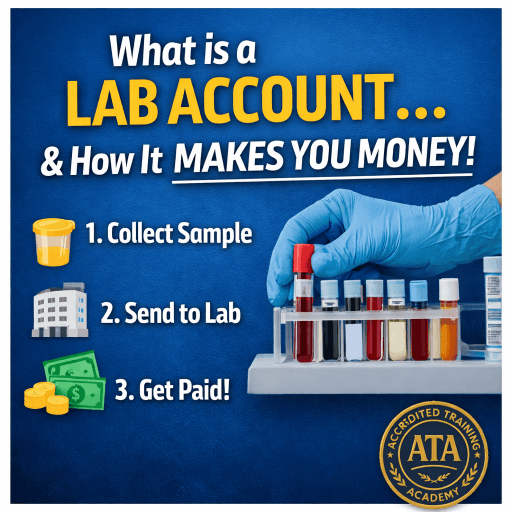
What Is a Lab Account in Drug Testing?
A lab account is an arrangement between your business and a drug testing laboratory, or a laboratory-access service platform, that allows you to submit specimens for testing, receive results, and support your employer clients with a complete testing workflow.
In regulated drug testing, the laboratory side of the process is not casual or optional. The U.S. Department of Transportation explains that regulated drug testing is governed by 49 CFR Part 40, and DOT states that HHS-certified laboratories are used for these drug tests. SAMHSA also explains that federally regulated testing requires an HHS-certified laboratory and Medical Review Officer (MRO) interpretation of results.
Laboratory Testing Access
Your business can send specimens to a laboratory for professional testing and reporting instead of offering collection-only services.
MRO-Reviewed Results
Verified results go through the proper review process, which adds credibility, compliance support, and client confidence.
Revenue Opportunity
You can charge for the value of a managed testing service, not just for the minutes spent collecting a specimen.
How the Drug Testing Business Model Works
The money-making model in drug testing is easier to understand when you break it into four steps:
1) Collect the Specimen
The process starts with a trained collector obtaining the specimen. Depending on the service, this may involve urine, oral fluid, hair, or another testing method. For DOT testing, collection procedures must follow 49 CFR Part 40.
2) Send the Specimen to the Laboratory
After collection, the specimen is sealed, documented, and sent to the laboratory. DOT explains that certified drug testing laboratories receive specimens and test them for drugs, while also conducting validity testing where required.
3) Receive MRO Results
When laboratory findings require review, they go to a Medical Review Officer. SAMHSA explains that MROs are licensed physicians who receive lab results and interpret federally regulated drug testing results. This step helps ensure the final reported result is properly reviewed before release.
4) Bill the Client
This is where your company earns money. Instead of billing only for a collection, you can charge for a full testing workflow that includes collection coordination, laboratory access, result reporting, and administrative service.
Why a Lab Account Helps You Make Money in Drug Testing
A collector without a lab account may only be able to offer one limited service. A business with a lab account can offer a more complete, professional solution that employers are actually looking for.
- You increase your value per client. You are offering more than a collection appointment.
- You create a stronger business model. Full-service coordination supports repeat business and recurring accounts.
- You look more credible to employers. Clients want a reliable workflow from collection through verified result reporting.
- You open the door to growth. Once the process is set up, you can scale accounts, locations, and services more efficiently.
What Employers Are Actually Buying
Most employers are not just paying for a specimen cup or a few minutes of collector time. They are paying for a process they can trust: a properly collected specimen, correct laboratory handling, appropriate result review, and a result they can use for their workplace program.
That is why a lab account matters so much. It helps move you from being only a collector to becoming a service provider with a real business model.
Common Beginner Mistake
Bottom Line
If you want to know how to make money in drug testing, start with this model:
That is the workflow that turns drug testing from a task into a business.