ATA & Industry News
DOT Part 40 Final Rule Changes 2026 | Oral Fluid Testing & Direct Observation Updates
DOT Issues Final Rule Changes to 49 CFR Part 40: What Employers, Collectors, and TPAs Need to Know
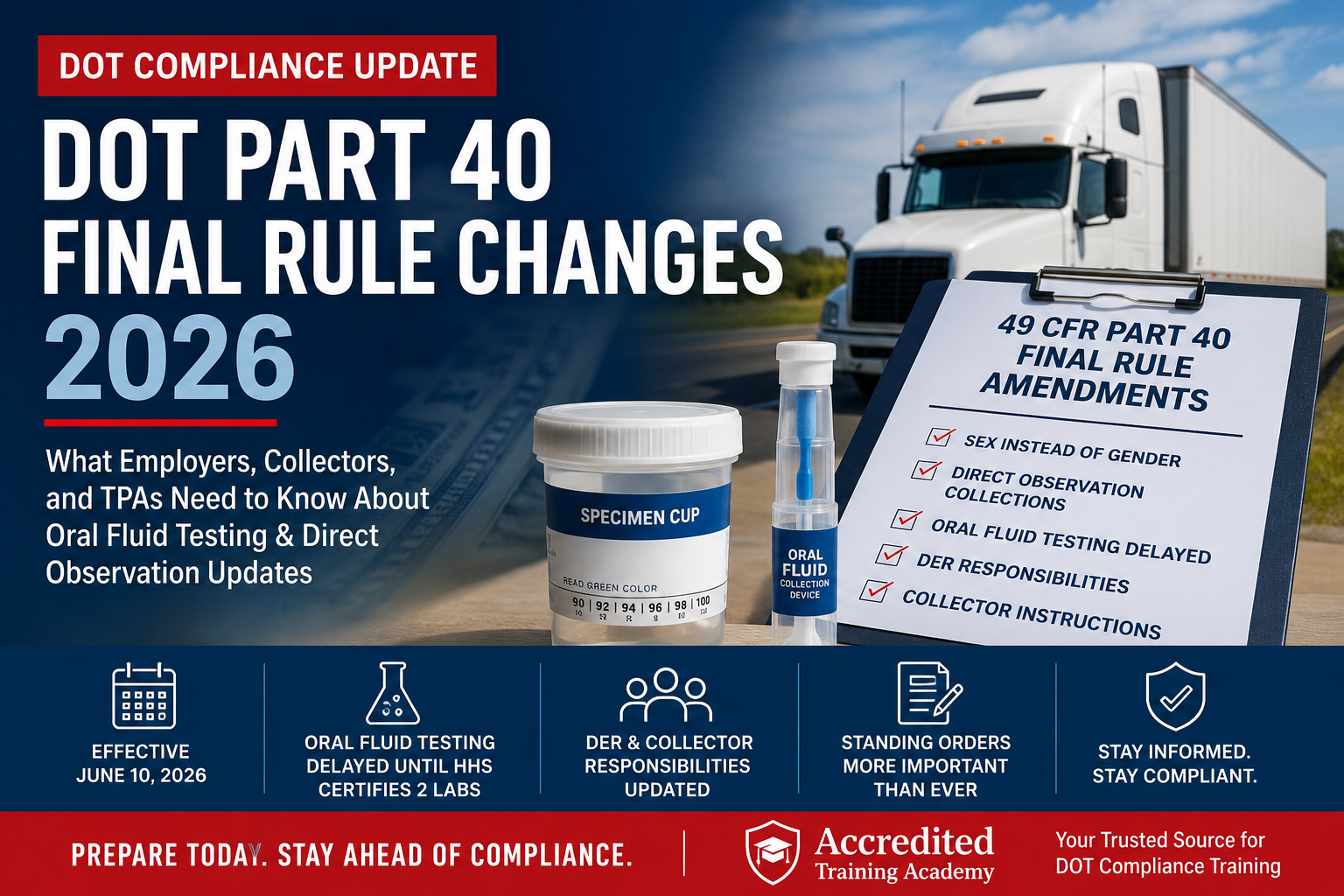
On May 11, 2026, the U.S. Department of Transportation’s Office of Drug and Alcohol Policy and Compliance issued a final rule amending several provisions of 49 CFR Part 40, the federal regulation governing DOT drug and alcohol testing programs.
The rule becomes effective June 10, 2026, and includes important updates involving direct observation collections, oral fluid testing implementation, DER responsibilities, and regulatory terminology.
Key Changes to 49 CFR Part 40
DOT Replaces “Gender” with “Sex”
DOT amended several sections of Part 40 to replace the word “gender” with “sex,” clarifying the term to mean male or female within the affected regulatory sections.
These changes affect:
- 49 CFR §40.67
- 49 CFR §40.69
- 49 CFR §40.145
Although this may appear to be a terminology change, it directly affects procedures involving directly observed collections and observer requirements.
Major Change to Direct Observation Collections
One of the most important revisions involves directly observed collections when there is no same-sex observer available.
DOT removed the previous requirement that an oral fluid test replace a directly observed urine collection for transgender or nonbinary individuals. As a result, beginning June 10, 2026, directly observed collections will continue to be handled through urine collections until the oral fluid laboratory certification requirements are met.
Beginning June 10, 2026:
- Direct observation collections will continue to be performed by urine collection.
- Oral fluid collections will not yet replace directly observed urine collections in these circumstances.
- Employers must continue arranging same-sex observers when required.
Oral Fluid Testing Delayed Again — But Preparation Must Continue
Although DOT oral fluid testing regulations have been issued, full implementation remains limited because HHS has not yet certified the required oral fluid laboratories.
After HHS certifies the second oral fluid laboratory, employers and service agents will receive up to 18 months to comply with the new oral fluid collection provisions.
This transition period is intended to give employers, TPAs, collectors, and service agents time to:
- Establish relationships with oral fluid laboratories
- Identify acceptable oral fluid collection devices
- Train and qualify oral fluid collectors
- Update standing orders and collection site instructions
- Revise internal policies and compliance procedures
What Happens If No Same-Sex Observer Is Available?
The revised 49 CFR §40.67(g)(3) requires the collector to notify the DER when a directly observed collection is required and no same-sex observer is available.
The DER must then either:
- Arrange for a same-sex observer to be present at the time of collection, or
- Send the employee to another collection site acceptable to the employer for a directly observed urine collection.
This makes current DER contact information and clear communication procedures more important than ever.
New Instructions for Collectors
The revised 49 CFR §40.65(d) also provides important direction to collectors.
After the second oral fluid laboratory becomes HHS-certified, collectors must check whether the employer has a standing order specifying which specimen collection should be performed.
If there is no standing order, the collector must contact the DER to determine whether to continue with a directly observed urine collection or proceed with an oral fluid collection.
What Employers and TPAs Should Do Now
Short-Term Action Items
- Verify that DER phone numbers are current and available to collection sites.
- Review direct observation procedures with collectors and collection sites.
- Confirm how collectors should escalate issues when no same-sex observer is available.
- Educate DERs and supervisors on the June 10, 2026 effective date.
Long-Term Preparation
- Create or update standing orders for collectors.
- Prepare for future oral fluid testing implementation.
- Identify qualified oral fluid collectors.
- Evaluate laboratory and device options once available.
- Update employer policies, service agreements, and compliance manuals.
Why This Matters
DOT-regulated employers cannot afford to wait until oral fluid testing is fully implemented before preparing. These changes affect collection site operations, DER communication, observer procedures, policy documentation, and future oral fluid readiness.
Employers and TPAs that prepare early will be better positioned to avoid confusion, collection delays, and compliance issues when the oral fluid transition period begins.
Final Thoughts
The May 2026 final rule is another important reminder that DOT drug and alcohol testing compliance continues to evolve. Employers, collectors, DERs, and TPAs should take this opportunity to update procedures, review standing orders, and prepare for future oral fluid testing requirements.
Accredited Training Academy will continue providing compliance education, training resources, and regulatory updates to help employers and service agents stay informed and prepared.
Need DOT Collector, DER, or Oral Fluid Training?
Accredited Training Academy provides DOT urine specimen collector training, oral fluid collector training, DER training, and TPA compliance education programs.
Visit Accredited Training Academy